
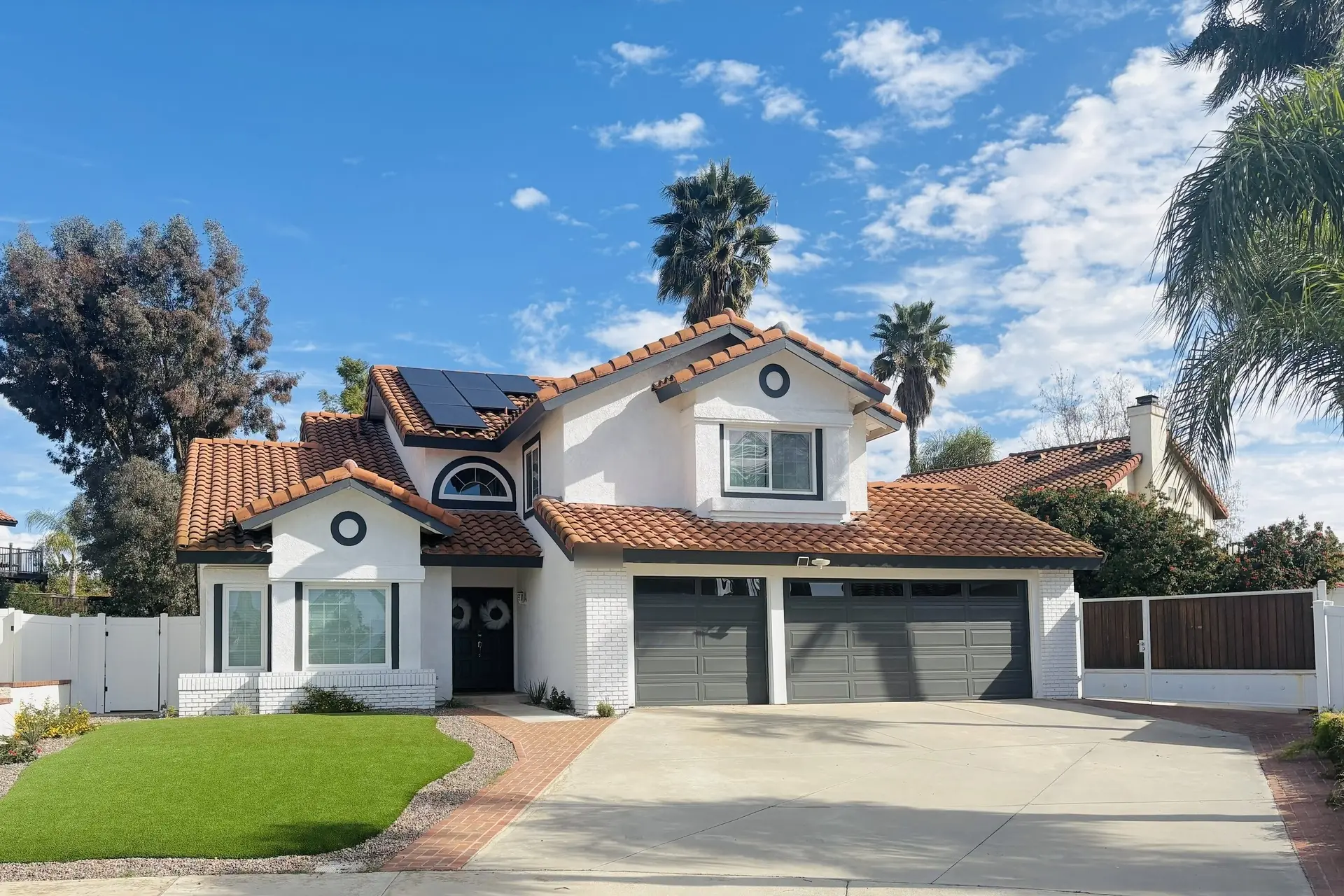
Picture a buyer ten days into escrow on a two-story that backs onto open hillside above South Corona. Inspections came back clean, the appraisal is ordered, and the lender sends a short email asking for evidence of insurance. The buyer calls the agent who wrote the policy on their last home and hears that the company isn't taking new homeowners policies on that street. That's a hypothetical, but every piece of it is something Inland Empire buyers run into, and it's why I tell buyers to shop insurance the same week their offer is accepted.
No lender will fund a purchase loan without property insurance in place, and in parts of Riverside and San Bernardino counties that coverage has gotten harder to find. A buyer who starts early almost always has a path to coverage, even if it doesn't look like the policy they had before.
Key takeaways
- Your lender needs proof of property insurance before the loan can fund, so insurance belongs on your first-week checklist instead of your last.
- Homes that back onto brush, open hillside or canyon land are the ones most likely to be turned down by standard carriers.
- The California FAIR Plan is the state's insurer of last resort. It covers fire, lightning, internal explosion and smoke, and a separate difference in conditions policy fills in most of the rest.
- Fannie Mae's Selling Guide accepts a state FAIR plan policy when it's the only coverage available at closing.
- Sellers in high and very high fire hazard severity zones owe buyers specific wildfire disclosures, and those documents help you shop for coverage.
- The standard C.A.R. purchase contract has carried an insurance contingency since 2024. Know its deadline before you write the offer.
Why insurance can stop a closing
Every purchase loan we see in the Inland Empire, whether conventional, FHA or VA, requires the buyer to insure the property before the lender releases funds. Fannie Mae's Selling Guide, for example, requires replacement cost coverage on one- to four-unit homes (roofs are the exception) and caps the deductible at 5% of the coverage amount. The insurance binder shows up on the lender's closing conditions right next to the appraisal and the final employment check. If it never arrives, the loan doesn't fund and escrow can't close.
For most of my years in this business, that step was a formality. A buyer called an agent, got a quote and sent the declarations page to escrow in the final week. Over the last few years we've watched that change for homes near wildland, where standard carriers decline more often and quotes take longer to come back.
Which Inland Empire homes run into trouble
Where a house sits relative to open land matters more than its price or age. The homes that draw declines are usually on the edge of a tract where backyards meet brush: the foothills along the Cleveland National Forest above South Corona and Temescal Valley, the Box Springs edge between Riverside and Moreno Valley, the hills around Norco and Jurupa Valley, the slopes west of Murrieta and Temecula, and the foothill neighborhoods of Yucaipa and Highland in San Bernardino County. A house three streets in will often quote normally.
The state's fire hazard maps are the quickest read. On March 24, 2025 the Office of the State Fire Marshal released updated maps for the local responsibility areas of Riverside County, sorting land into moderate, high and very high fire hazard severity zones. Cities that run their own fire departments, Riverside and Corona among them, handle their own map adoption, so check with the city if the house is inside one of those. An insurer's own wildfire score won't always match the state's zone, but a high or very high designation is a strong hint you'll need to shop harder.
What the seller has to hand you
California gives buyers in fire zones two documents that make insurance shopping easier, and you should ask for both as soon as you're in contract.
The first is the home hardening disclosure under Civil Code §1102.6f. For a home in a high or very high fire hazard severity zone that was built before January 1, 2010, the seller has to tell you the home predates the wildland-urban interface building codes. The seller also lists the vulnerable features they know about, such as vents with openings larger than one-eighth of an inch, untreated wood shingle or shake roofs, combustible landscaping within five feet of the home, single-pane or nontempered windows, and rain gutters without metal or noncombustible covers. Since July 1, 2025 the disclosure has also included a list of low-cost retrofits and which of them the seller completed.
The second is defensible space documentation under Civil Code §1102.19. Since July 1, 2021, a seller in those same zones has owed the buyer documentation that the property complies with the state's defensible space law or a local vegetation management ordinance. If the seller doesn't have it, buyer and seller sign a written agreement that the buyer will obtain it, and where no local ordinance applies the buyer has one year after closing to do so.
Hand both documents to whoever is quoting your coverage. Insurers price the features on that list, and the Department of Insurance's Safer from Wildfires regulation, adopted in 2022, requires insurers to recognize mitigation like upgraded roofs and windows, defensible space and community programs such as Firewise USA in their rates.
Where to look, in order
The Department of Insurance lays out a sequence for finding residential coverage, and it matches what we tell buyers.
- Start with local agents and brokers, including independent brokers who represent several carriers. The Department publishes a contact list with toll-free numbers for more than 50 insurers that sell homeowners coverage.
- Ask a second and third broker if the first can only place you with the FAIR Plan. Different brokers represent different companies, and the Department's Home Insurance Finder shows which insurers each agent works with.
- Ask about surplus lines carriers. These are insurers that aren't admitted in California but can write policies through a licensed surplus lines broker, often at a higher premium.
- Use the FAIR Plan as the last option, paired with a difference in conditions policy.
A hypothetical shows how the timing plays out. Say a buyer gets an offer accepted on a Monday for a home that backs onto open hillside in Moreno Valley. If they call two brokers that afternoon, they'll usually know by midweek whether a standard carrier will write the house. If neither can, there's still time to line up a FAIR Plan policy and a difference in conditions policy, compare the combined premium against what they planned to spend, and decide before any contingency comes off. A buyer who waits until the lender asks for the binder in week three has a fraction of that room to work with.
How the FAIR Plan and a DIC policy fit together
The FAIR Plan is a state-mandated pool that insures homeowners who can't find coverage in the regular market. A FAIR Plan dwelling policy covers fire, lightning, internal explosion and smoke. It leaves out theft, liability, water damage from a burst pipe and most of the other losses a standard homeowners policy handles. A difference in conditions policy, or DIC, fills that gap. Your broker places it with a separate company, and the two policies together come close to what a traditional homeowners policy covers.
The Insurance Commissioner raised the FAIR Plan's residential limit to $3 million in 2025, which is enough for most homes in the Inland Empire. On the lending side, Fannie Mae's Selling Guide accepts coverage through a state FAIR plan when it's the only coverage available at closing or renewal. Your lender will still check the coverage amount and the deductible against its own requirements, so get the declarations pages to them as soon as both policies are bound.
Two policies means two premiums, two renewal dates and two companies to call after a loss, so price both before you remove your contingencies.
The contingency that protects you
C.A.R.'s residential purchase agreement added an insurance contingency in 2024. If you can't get acceptable coverage within the contingency period, you can cancel or renegotiate instead of putting your deposit at risk. The window commonly runs 17 days, the same default as the investigation and loan contingencies, and like any contingency it can be shortened or lengthened in the offer.
Two cautions come with it. Once you remove that contingency, you've accepted the insurance situation at whatever it costs. And in a competitive market a seller may push for a shorter window, so the earlier you have quotes in hand, the less that request costs you. How the contingency deadlines stack up is laid out in our post on contingency periods in a California purchase contract, and what's at stake with your deposit is in our earnest money post.
Common questions
Will my lender accept a California FAIR Plan policy?
Usually, as long as the coverage meets the lender's requirements. Fannie Mae's Selling Guide accepts a state FAIR plan policy when it's the only coverage available at closing. Your lender will also look at the coverage amount and the deductible, so send the declarations page early.
Can I close first and find insurance afterward?
Not with a loan. The lender needs evidence of insurance before it funds. A cash buyer can close without coverage but carries the full risk of a loss from the first night.
Does the FAIR Plan cover everything a homeowners policy does?
No. It covers fire, lightning, internal explosion and smoke. A difference in conditions policy from another company is how most owners add liability, theft and water damage coverage.
How do I find out whether a house is in a fire hazard severity zone?
Ask for the natural hazard disclosure report early in escrow, since it states the zone. You can also check the State Fire Marshal's maps, or your city's maps if the city runs its own fire department.
Start on insurance the week you open escrow
Insurance used to be one of the last calls before closing. On a home near open land in the Inland Empire, it's one of the first. We talk through coverage with buyers at the offer stage, and because our agents, lender and escrow work under one roof, the insurance deadline gets tracked alongside the appraisal and the loan conditions from the day escrow opens. If you're getting ready to buy, our buyer's guide walks through the rest of the process.
Sources
- https://www.insurance.ca.gov/01-consumers/105-type/5-residential/Top10Tips_FindingResidentialIns.cfm— checked 2026-11-12
- https://www.insurance.ca.gov/0400-news/0100-press-releases/2025/release030-2025.cfm— checked 2026-11-12
- https://blog.car.org/-/media/CAR/Documents/Learn-and-Thrive/PDF/Marketing-Tools/What-Is-FAIR-Plan-062025.pdf— checked 2026-11-12
- https://selling-guide.fanniemae.com/sel/b7-3-01/general-property-insurance-requirements-all-property-types— checked 2026-11-12
- https://selling-guide.fanniemae.com/sel/b7-3-02/property-insurance-requirements-one-four-unit-properties— checked 2026-11-12
- https://rvcfire.org/our-departments/fire-marshal/fire-hazard-severity-zones— checked 2026-11-12
- https://california.public.law/codes/ca_civ_code_section_1102.6f— checked 2026-11-12
- https://california.public.law/codes/ca_civ_code_section_1102.19— checked 2026-11-12
- https://www.insurance.ca.gov/0400-news/0100-press-releases/2022/release076-2022.cfm— checked 2026-11-12
- https://therealdeal.com/sanfrancisco/2024/10/02/new-contracts-allow-uninsured-home-buyers-to-back-out— checked 2026-11-12

Jeff Maas
Broker-Owner · DRE #00981576 · NMLS #246684
Jeff Maas founded National Realty Group in 1991 and remains its Owner and Broker, and has owned National One Mortgage Corp since 1994, putting real estate, lending, escrow and property management under one roof. He has testified at trial as an expert witness in mortgage lending disputes, retained by both plaintiffs and defendants, and since 2018 has been an adjunct professor at California Baptist University teaching Real Estate Principles and Real Estate Finance. Licensed in California since 1988, he has handled well over a thousand sales and loans, with particular depth in short sales and VA financing. He is a member of the California and National Associations of REALTORS®, and a recipient of National Realty Group's Eagle Award for 2003, 2004 and 2005 and United Wholesale Mortgage's 1% Award for 2021.
More from Jeff →This post is general information, not legal, tax, lending or investment advice, and it is not a guarantee of any result. Market figures are accurate as of the date shown and change. National Realty Group is an Equal Housing Opportunity brokerage.