

Around day twelve I get the call. Offer accepted almost two weeks ago, nothing has visibly happened, and the buyer wants to know whether anyone is actually doing anything.
Something is always happening. It's just happening in four places at once, and three of them are people the buyer has never spoken to.
Thirty days is not a waiting period. It's a sequence, and the sequence has almost no slack in it. Miss a step in week one and you don't find out in week one. You find out in week four, when there's no time left to fix it.
Key takeaways
- California closes through escrow, not through attorneys. The escrow holder is neutral, takes written instructions from both sides, and cannot favor either one, including the one who opened the file.
- Your contract sets the real schedule. The standard California purchase agreement carries short default windows for investigation, appraisal, and loan, and those get negotiated up or down constantly. The dates in your contract govern, not the ones in anybody's blog post.
- You have to receive your Closing Disclosure at least three business days before you sign. That's federal law, it is not waivable in the ordinary case, and three specific changes restart the clock.
- Funding, recording, and possession are three different moments. People assume they happen together and plan movers around the wrong one.
- Four places deals die: the appraisal, the loan conditions, the repair negotiation, and title. Three of those are predictable in week one.
Who is actually holding your file
Four parties, four separate jobs, and the buyer usually only talks to one of them.
The escrow holder is the neutral one. They hold the money, hold the signed documents, and do exactly what both sides instruct them in writing. They don't negotiate, they don't advise, and they can't move a dollar without written instruction from whoever put it in. That neutrality is the whole point of the role, and it's also why escrow can't rescue a deal that's falling apart — it isn't their job and they aren't allowed.
California licenses escrow companies under the Escrow Law. A real estate broker can also hold escrow, but only in a transaction where the broker is already an agent or a party. The statute is explicit that the exemption isn't available to a broker who wants to run escrows for anybody else's business. So a broker-held escrow is narrow by design, and a broker holding one has to deposit funds by the next business day, keep books to accepted accounting standards, and hand you a written statement of every receipt and disbursement at closing.
The lender is on a separate clock entirely, running underwriting and an appraisal you don't control. The title company is researching whether the seller can actually convey what they're selling. And your agent is the only one whose job is to watch all three and notice when one of them stalls.
Week one: the week that decides the rest
Earnest money goes in. Escrow opens. The preliminary title report gets ordered. Inspections get scheduled.
That last one is where buyers lose time they never get back. The investigation contingency is short, and it covers everything: general inspection, roof, sewer, pest, whatever specialist the general inspector tells you to call. If the general inspection happens on day nine and the inspector says get a sewer scope, you now need a sewer company with an opening, a report, and a decision, inside a window that started counting the day you opened escrow.
Order inspections the day escrow opens. Not after the preliminary title report comes back, not after the appraisal is scheduled. The day it opens.
Read the preliminary title report when it arrives instead of filing it. That's where easements show up, and recorded assessments, and the occasional lien nobody mentioned. A solar assessment that rides on the property tax bill shows up here, and it's a great deal easier to deal with in week one than in week four.
Week two: the appraisal
The appraisal is ordered by the lender, performed by somebody neither of you picked, and it is the first point where a deal that felt solid can stop being solid.
A low appraisal doesn't automatically kill anything. It creates a gap, and the gap gets handled one of four ways: the seller comes down, the buyer brings more cash, you split it, or somebody walks. What it does do is burn days while everyone decides, and those days come out of the same calendar as everything else.
Appraisals also come back with conditions. A roof that's visibly done, a missing handrail, a water heater that isn't strapped. On some loan types those have to be corrected before funding, which means a contractor, a receipt, and a re-inspection, all inside the escrow period.
Week three: conditions, and the document nobody warned you about
By now the file is in underwriting and the lender is issuing conditions. Some are trivial. Some are not.
The ones that hurt are the ones nobody anticipated. A large deposit in a bank statement that now needs a documented source. An unreimbursed business expense that changes the picture. A gap in employment that didn't come up in the pre-approval conversation. None of these is unusual, and every one of them costs days.
This is also when buyers start making the mistake that undoes everything: opening credit. A furniture account, a card for the move, a car. The lender pulls credit again before funding on most files, and a new account in the final week can require the whole file to be re-underwritten.
Buy nothing on credit until you have the keys. Not a mattress. Not a refrigerator.
Week four: signing, funding, recording
Three separate events, and treating them as one is how people end up with a moving truck and nowhere to put it.
First the Closing Disclosure. Federal law requires that you receive it at least three business days before you sign. That waiting period is real and it has teeth. Three changes restart it entirely: the APR becoming inaccurate, the loan product changing, or a prepayment penalty being added. Anything else gets corrected without a new three-day wait.
Then signing. You sign with a notary, usually loan documents and escrow instructions together.
Then funding, which is the lender actually wiring money. Then recording, which is the county recorder's office entering the deed. In Riverside County, recording is what makes the transfer real, and it happens on the recorder's schedule, not yours. A document that reaches the recorder late in the day records the next business day.
| Event | What it means | What it does not mean |
|---|---|---|
| Signing | You have signed the documents | The money has moved |
| Funding | The lender has wired the funds | You own it |
| Recording | The county has recorded the deed. You own it | You have the keys |
| Possession | Whatever your contract says it is | Automatically the same day |
Possession is a contract term. It can be the day of recording, it can be days later, and the two get conflated constantly. Check the contract before you book the truck.
The four places escrow actually dies
After enough of these, the failures stop being surprising.
Appraisal gap, which is a money problem with a deadline. Loan conditions, which is almost always a documentation problem that existed before the offer was written. The repair negotiation after inspections, which is a disagreement nobody prices in advance. And title, which is a problem the seller usually didn't know they had — an old lien, a sibling on the deed, a recorded assessment.
Three of those four are visible in week one if someone goes looking. That is most of what an agent is for during escrow, and it's why I'd rather be annoying in week one than apologetic in week four.
Common questions
How long does escrow usually take in California?
Thirty days is the common target on a financed purchase and it's achievable when nothing goes sideways. Cash closes faster because the entire lender track disappears. But the contract sets the real date, and a thirty-day escrow with a long inspection window and a slow HOA is tighter than a forty-five day one. Look at the contingency dates, not the total.
Can escrow close early?
Sometimes, and it's less common than people expect. The lender's timeline is the binding one, and the three-business-day disclosure requirement sits in front of signing no matter how ready everyone is. On a cash purchase with clean title, yes, meaningfully early.
Who picks the escrow company?
It's negotiated in the purchase agreement like anything else, and in Southern California the custom varies by area and by who's paying for what. You are allowed to have an opinion about it. If a licensee in your transaction has a financial interest in the escrow holder, California requires that you be told so in writing.
What happens if we blow a contingency date?
Not what people assume. Contingencies in the California form don't expire on their own. They're removed in writing. A date passing doesn't remove anything, but it does let the other side serve a notice to perform, and after that the clock is very short. Nobody should be learning this in week four.
Before you write the offer
Most of what goes wrong in escrow was decided before escrow opened: in the contingency dates, the loan type, and whether anybody read the preliminary title report. If you're getting close to writing an offer, the [buyer resources](/buyers) walk through the sequence, and I'm happy to go through your specific dates before you sign anything.
Selling instead, and trying to work out how your escrow lines up with your next purchase? Start with a [home valuation](/home-valuation) and we'll map both timelines against each other.
Sources
- https://www.ecfr.gov/current/title-12/chapter-X/part-1026/subpart-C/section-1026.19— checked 2026-09-29
- https://codes.findlaw.com/ca/financial-code/fin-sect-17006.html— checked 2026-09-29
- https://www.law.cornell.edu/regulations/california/10-CCR-2950— checked 2026-09-29
- https://dfpi.ca.gov/regulated-industries/escrow-law/about-the-escrow-law/— checked 2026-09-29
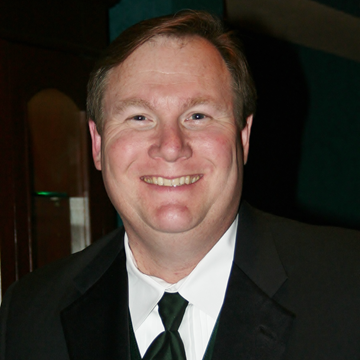
Jeff Maas
Broker-Owner · DRE #00981576 · NMLS #246684
Jeff Maas founded National Realty Group in 1991 and remains its Owner and Broker, and has owned National One Mortgage Corp since 1994, putting real estate, lending, escrow and property management under one roof. He has testified at trial as an expert witness in mortgage lending disputes, retained by both plaintiffs and defendants, and since 2018 has been an adjunct professor at California Baptist University teaching Real Estate Principles and Real Estate Finance. Licensed in California since 1988, he has handled well over a thousand sales and loans, with particular depth in short sales and VA financing. He is a member of the California and National Associations of REALTORS®, and a recipient of National Realty Group's Eagle Award for 2003, 2004 and 2005 and United Wholesale Mortgage's 1% Award for 2021.
More from Jeff →This post is general information, not legal, tax, lending or investment advice, and it is not a guarantee of any result. Market figures are accurate as of the date shown and change. National Realty Group is an Equal Housing Opportunity brokerage.