
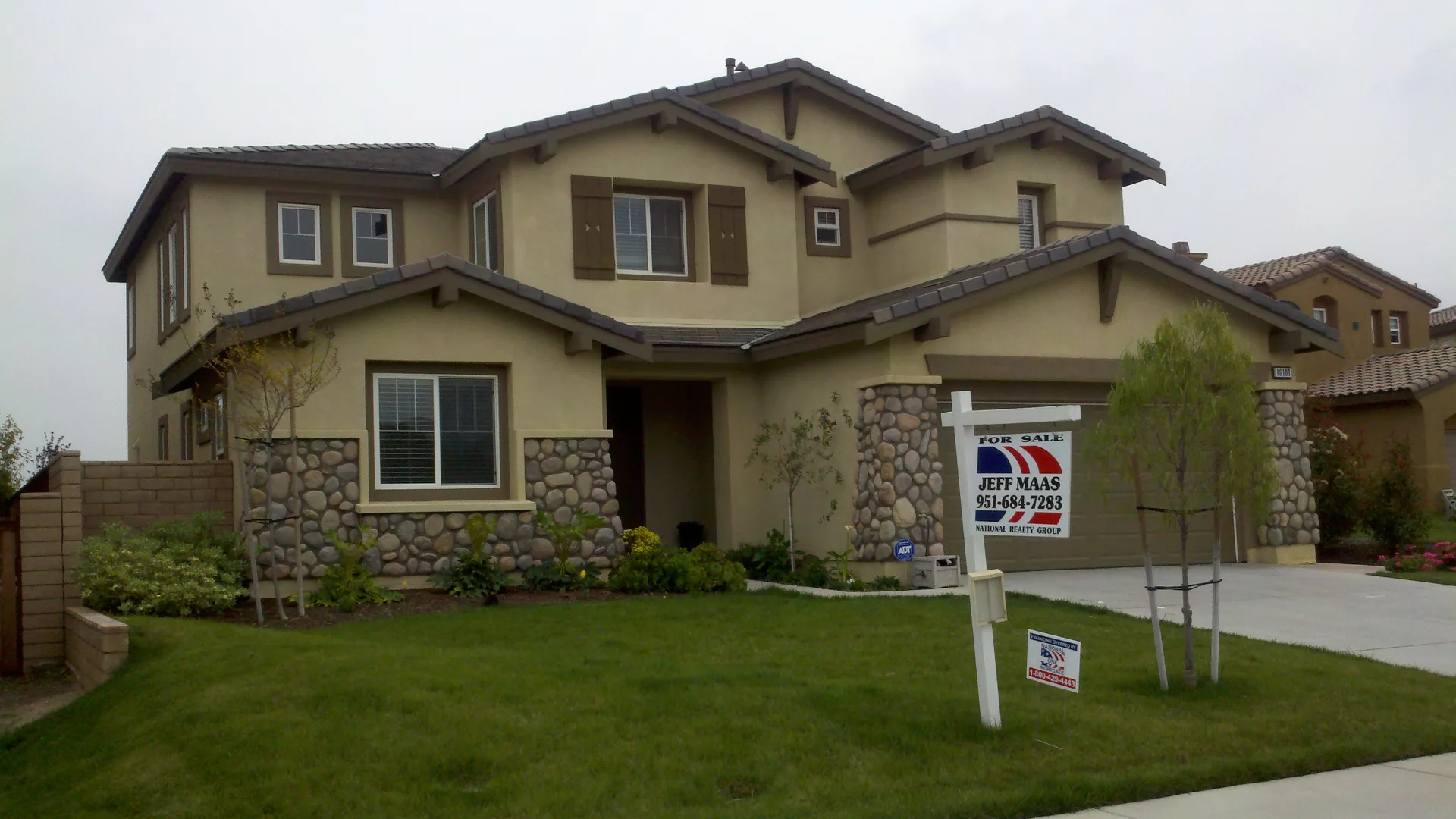
A buyer finds a house in Corona. Newer tract, good schools, the payment works. Then somebody mentions Mello-Roos and the whole thing gets murky, because half of what people say about it is wrong and the other half is incomplete.
So here's the straight version.
Key takeaways
- Mello-Roos is a special tax a community facilities district levies to pay for the infrastructure that made the neighborhood possible — streets, sewers, schools, parks.
- It shows up on your property tax bill but it is not a property tax. It is not based on your home's value, so it does not go down when values go down.
- The disclosure you're entitled to has to state the maximum tax the district can levy, not just this year's amount. Those are different numbers and the gap matters.
- It also has to tell you the last year the tax can be levied. Some districts are most of the way through their term. Some are just getting started.
- It does not go away when you sell. You're handing it to the next owner, and they'll be looking at the same disclosure you are now.
What it actually is
When a developer builds a new tract, somebody has to pay for the streets, the storm drains, the sewer capacity, sometimes a school and a park. Historically that came out of the city's general fund or got rolled into the price of the homes.
The Mello-Roos Community Facilities Act of 1982 gave cities and counties a third option. They form a community facilities district covering the new development, issue bonds to build the infrastructure up front, and levy a special tax on every parcel inside the district to service those bonds.
The practical translation: the homes cost less than they otherwise would have, and you pay the difference over the next twenty to forty years on your tax bill.
Whether that's a good deal depends entirely on the numbers, which is why the numbers are worth understanding before you're in contract.
Why it is not a property tax, even though it looks like one
This is the distinction that trips people up.
Your regular property tax is ad valorem — based on value. Assessed value goes up, the bill goes up. Values crater, the bill eventually follows.
A CFD special tax isn't. It's set by a formula written into the district's rate and method of apportionment, usually keyed to lot size or square footage or unit type, and it does whatever that formula says regardless of what your house is worth. In a downturn your property tax can fall while your Mello-Roos sits exactly where it was, or goes up on schedule.
I've watched that land badly on owners who assumed the whole tax bill moved together. It doesn't.
The number on the listing is not the number that matters
Listings quote the current annual special tax. That figure is accurate and almost useless on its own, because most districts have an escalator built into them.
California Civil Code section 1102.6b requires the seller to make a good faith effort to get you a disclosure notice from the district. That notice has to spell out:
- The name of the district levying the tax
- The annual amount for the current year
- The maximum tax that may be levied in any year
- The percentage that maximum can rise each year
- The last year the tax may be levied
- A contact phone number, where one exists
Read the third and fourth lines twice. A district charging $2,100 today with a 2% annual escalator and eighteen years left is a very different purchase from one charging $2,100 with no escalator and four years left, and the listing sheet shows you the same $2,100 for both.
Ask for that notice early. Not at the end of the contingency period when you're out of time to think about it.
Where you run into it around here
Mello-Roos tracks new development, so you find it where the Inland Empire built fastest, and it is one of the real differences between [new construction and a resale](/blog/new-construction-vs-resale-inland-empire). Corona, Eastvale, Menifee, Temecula, Murrieta, Beaumont, parts of Jurupa Valley and Moreno Valley.
Older neighborhoods mostly don't have it. A 1960s house in Riverside or a ranch in Norco generally predates the whole mechanism.
That's worth knowing when you compare two houses at the same price in two different parts of the county. The one without the special tax might cost you three or four hundred dollars a month less to hold, and the payment your lender qualifies you on includes it.
How it changes what you can buy
Underwriters count the full tax bill in your monthly housing expense. Special taxes included — and the special tax sits on top of the base rate, which [breaks down differently than most buyers expect](/blog/riverside-county-property-tax-rate-how-it-breaks-down).
So a $250 monthly Mello-Roos isn't just $250. It's $250 of your qualifying capacity, which at current rates is somewhere around $40,000 of purchase price you can no longer reach.
Two houses listed at $700,000, one with a CFD and one without, are not the same house to a lender. If you're close to the edge of what you qualify for, that difference decides which one you can actually buy.
Run both. It takes ten minutes and it has changed which neighborhood more than a few of my buyers ended up in.
Common questions
Can I pay off Mello-Roos early?
Sometimes. Some districts allow a prepayment that discharges the special tax lien on your parcel, and some don't. The district itself is the only one who can tell you, and the payoff figure is usually large enough that most owners decide against it. Call the number on the disclosure notice and ask.
Is Mello-Roos tax deductible?
Ask your tax professional, and be skeptical of anyone who answers this confidently in a blog post. The general principle is that assessments benefiting a specific property differ from ad valorem taxes in how they're treated, and your situation depends on facts I don't have. This is genuinely a CPA question, not an agent question.
Does the tax disappear when the bonds are paid off?
The disclosure notice states the last year the tax may be levied, so you'll know the end date before you buy. Districts do reach the end of their term. Whether that's four years out or twenty-four is exactly the thing to check before you make an offer.
Do I have to disclose it when I sell?
Yes. Civil Code 1102.6b puts that obligation on the seller — you'll be making the same good faith effort to get the notice for your buyer that the seller made for you. Keep a copy of yours.
Running the numbers on a specific house
If you're weighing two properties and one has a CFD, I'll pull the disclosure and run both payments side by side so you can see what it does to your qualifying number. [Get in touch](/contact) with the addresses.
If you're still narrowing down neighborhoods, [Corona](/cities/corona) and [Temecula](/cities/temecula) are both worth understanding on this point before you fall for a house.
And if you're buying rather than just comparing, the [supplemental tax bill](/blog/supplemental-property-tax-bill-riverside-county) is the other one that catches people in their first year. It arrives separately, and your lender does not pay it.
Sources
- https://codes.findlaw.com/ca/civil-code/civ-sect-1102-6b/— checked 2026-09-29
- https://law.justia.com/codes/california/code-govt/title-5/division-2/part-1/chapter-2-5/— checked 2026-09-29
- https://www.fontanaca.gov/376/How-Do-I-Find-Out-About-My-CFD— checked 2026-09-29

Jeff Maas
Broker-Owner · DRE #00981576 · NMLS #246684
Jeff Maas founded National Realty Group in 1991 and remains its Owner and Broker, and has owned National One Mortgage Corp since 1994, putting real estate, lending, escrow and property management under one roof. He has testified at trial as an expert witness in mortgage lending disputes, retained by both plaintiffs and defendants, and since 2018 has been an adjunct professor at California Baptist University teaching Real Estate Principles and Real Estate Finance. Licensed in California since 1988, he has handled well over a thousand sales and loans, with particular depth in short sales and VA financing. He is a member of the California and National Associations of REALTORS®, and a recipient of National Realty Group's Eagle Award for 2003, 2004 and 2005 and United Wholesale Mortgage's 1% Award for 2021.
More from Jeff →This post is general information, not legal, tax, lending or investment advice, and it is not a guarantee of any result. Market figures are accurate as of the date shown and change. National Realty Group is an Equal Housing Opportunity brokerage.