
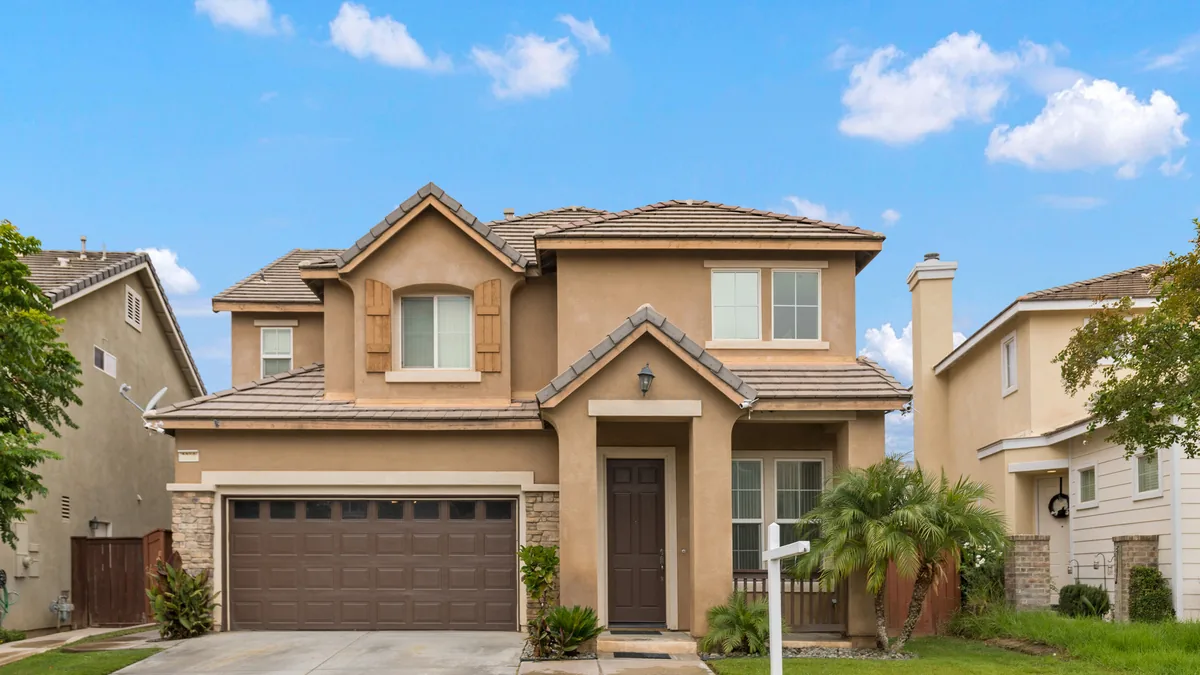
The model home is doing its job. Everything works, nothing is anybody else's taste, and the sales office has an incentive on the table that the resale down the street cannot match.
Two miles away is a twelve-year-old house on a bigger lot with mature trees, no special tax, and a roof that will need attention in a few years.
Both can be the right answer. What makes the comparison hard is that the two sides don't present the same information, and the things that differ most are the ones nobody puts in the brochure.
Key takeaways
- Most newer Inland Empire subdivisions sit in a community facilities district, which means a special tax on top of your regular property tax for a fixed number of years.
- California requires the seller to disclose that district by name, with the current annual tax, the maximum that may be levied, the annual escalator, the last year it may be levied, and a contact number. The listing figure alone is close to useless.
- Builder incentives are real money and they are usually tied to using the builder's own lender. Read what the incentive is actually attached to before you treat it as a discount.
- A new home's price often excludes things a resale already has: landscaping, window coverings, fencing, sometimes the lot premium itself.
- Resale gives you a house you can inspect and a neighborhood you can observe. New construction gives you a warranty and nothing to fix for a while.
- The honest comparison is total annual cost of ownership over your actual holding period, not purchase price.
The special tax is the biggest structural difference
Most of the newer product in this region (Eastvale, parts of Corona, Menifee, Beaumont, the newer edges of Riverside) was built inside a community facilities district. The district issued bonds to pay for the infrastructure, and the homes inside it carry a special tax until those bonds are retired.
It arrives on your property tax bill. It is not part of the one percent. It does not go away when you refinance, and it transfers to whoever buys the house from you.
California Civil Code §1102.6b says what has to be disclosed, and it is more than the number on the listing. The notice must state the district's name, the current annual tax, the maximum tax that may be levied, the annual escalator percentage, the last year the tax may be levied, and a contact for more information.
Those middle three are the ones that matter and the ones that get skipped. A current figure tells you what this year costs. The maximum and the escalator tell you what year twelve costs. The end date tells you whether you will still be paying it when you sell.
Ask for the full notice. Not the number. The notice. If the sales office or the listing agent can't produce it, that itself is information.
What the builder incentive actually is
Builders compete on incentives rather than on list price, because list price sets the comparable for every other home in the tract and they will not cut it.
So the incentive shows up as credits toward closing costs, design center allowances, upgrades included, or financing terms through the builder's affiliated lender. The money is genuinely real. The question is what it's attached to.
Most of the meaningful incentives require you to use the builder's lender. That's legal and it's common. It also means the incentive is only worth what it's worth after you compare that lender's terms against an outside quote, and you are allowed to do that. You can take the incentive and still shop. Plenty of buyers don't, because nobody tells them the two are separable.
Get the incentive in writing, get what it's conditioned on in writing, and get one outside quote. If the builder's package still wins, you've lost an afternoon and gained certainty.
What is not in the new home's price
The resale has a yard. The new house has dirt.
Depending on the builder and the community, landscaping (sometimes front only, sometimes nothing), window coverings, fencing, and rear hardscape may all be yours to add after closing. On a standard tract lot that is a meaningful number, and it lands in the first year when you have the least cash.
Lot premiums are their own category. A corner, a view, a cul-de-sac or backing to open space rather than another house all carry a premium above base price. That premium is real to you and it does not necessarily come back when you sell, because the next buyer is comparing against whatever the builder is charging then.
Write down the all-in number: base, premium, upgrades, and everything you'll have to add in the first year. That's the figure to compare against the resale's asking price.
What resale gives you that new construction cannot
You can see it. All of it.
You can inspect a twelve-year-old house and find out what's wrong with it. You can drive the street at 7am and at 9pm. You can see whether the neighbors maintain their yards, whether the park gets used, how bad the commute actually is at the hour you'd be doing it. You can read an HOA's reserve study and see whether they've funded it.
You usually get a bigger lot and mature landscaping, because lots have been shrinking for thirty years.
And in most established neighborhoods there is no special tax, or a small one that is nearly retired.
The trade is that you are buying someone else's deferred maintenance along with it. A roof, an HVAC system and a water heater all have service lives, and on a house of a certain age they tend to come due together.
What new construction gives you that resale cannot
A warranty, and a few years where nothing needs your attention.
Builders carry a structural warranty, and California's statutory construction defect framework gives you standards and a process. Systems are new. Everything meets current code, which matters more than people think for insulation, windows and electrical capacity.
Nothing is anyone else's taste, which sounds trivial and isn't. A buyer who would otherwise spend two years and real money renovating a resale into what they wanted is comparing the wrong two numbers.
And the tract is uniform, which cuts both ways: predictable comparables when you sell, and a street where thirty houses may list the same spring.
The comparison worth running
Price is the wrong axis. Run annual cost of ownership over the years you actually plan to be there.
| Line | New construction | Resale |
|---|---|---|
| Purchase price | Base + lot premium + upgrades | Asking, usually negotiable |
| First-year additions | Landscaping, window coverings, fencing | Usually none |
| Property tax base | Assessed at your purchase price | Reassessed at your purchase price |
| Special tax | Common. Get the full §1102.6b notice | Often none in older tracts |
| HOA | Usually, and often newly set | Known history, readable reserves |
| Maintenance, first 5 years | Close to nothing | Budget for systems reaching end of life |
| What you can verify first | A model and a plan | The actual house and street |
Add the special tax over your holding period and the comparison frequently moves. Not always against new construction. On a long hold with a tax that retires early, it can land the other way. But it moves, and the brochure version never shows it.
Common questions
Can I negotiate with a builder?
On list price, rarely, because it sets the comparable for the rest of the tract. On incentives, upgrades, lot premiums and timing, often. The negotiation is real, it just happens on different lines than a resale negotiation does.
Do I need my own agent when buying new construction?
The person in the sales office works for the builder. That is not a criticism, it is their job. Representation on your side is a separate question, and most builders have a registration policy that requires your agent to be with you on the first visit. Check it before you go, because it generally cannot be fixed afterward.
Does the special tax ever go away?
Yes. The notice has to state the last year it may be levied. That date is the single most useful item in the whole disclosure and the one buyers least often ask for. A district nearly at the end of its term is a very different proposition from one that just issued.
Will a new home appraise at what I paid for it?
Usually, because the builder's other sales in the same tract are the comparables. Where it gets interesting is lot premiums and heavy upgrades, which an appraiser may not credit at full cost. Worth understanding before you spend heavily at the design center.
Compare them properly
If you're looking at both, I'll pull the district disclosure on anything new you're considering and run the holding-cost comparison against the resales you like. The [buyer resources](/buyers) cover the sequence, and the comparison itself takes about half an hour.
Looking at specific markets, the [Corona](/cities/corona) and [Riverside](/cities/riverside) pages are a reasonable place to see how the newer and older stock actually price against each other.
Sources
- https://leginfo.legislature.ca.gov/faces/codes_displaySection.xhtml?lawCode=CIV§ionNum=1102.6b— checked 2026-09-29
- https://www.dre.ca.gov/files/pdf/re6.pdf— checked 2026-09-29
- https://law.justia.com/codes/california/2022/code-shc/division-7/part-3/chapter-29/article-2/section-5898-30/— checked 2026-09-29

Jeff Maas
Broker-Owner · DRE #00981576 · NMLS #246684
Jeff Maas founded National Realty Group in 1991 and remains its Owner and Broker, and has owned National One Mortgage Corp since 1994, putting real estate, lending, escrow and property management under one roof. He has testified at trial as an expert witness in mortgage lending disputes, retained by both plaintiffs and defendants, and since 2018 has been an adjunct professor at California Baptist University teaching Real Estate Principles and Real Estate Finance. Licensed in California since 1988, he has handled well over a thousand sales and loans, with particular depth in short sales and VA financing. He is a member of the California and National Associations of REALTORS®, and a recipient of National Realty Group's Eagle Award for 2003, 2004 and 2005 and United Wholesale Mortgage's 1% Award for 2021.
More from Jeff →This post is general information, not legal, tax, lending or investment advice, and it is not a guarantee of any result. Market figures are accurate as of the date shown and change. National Realty Group is an Equal Housing Opportunity brokerage.