
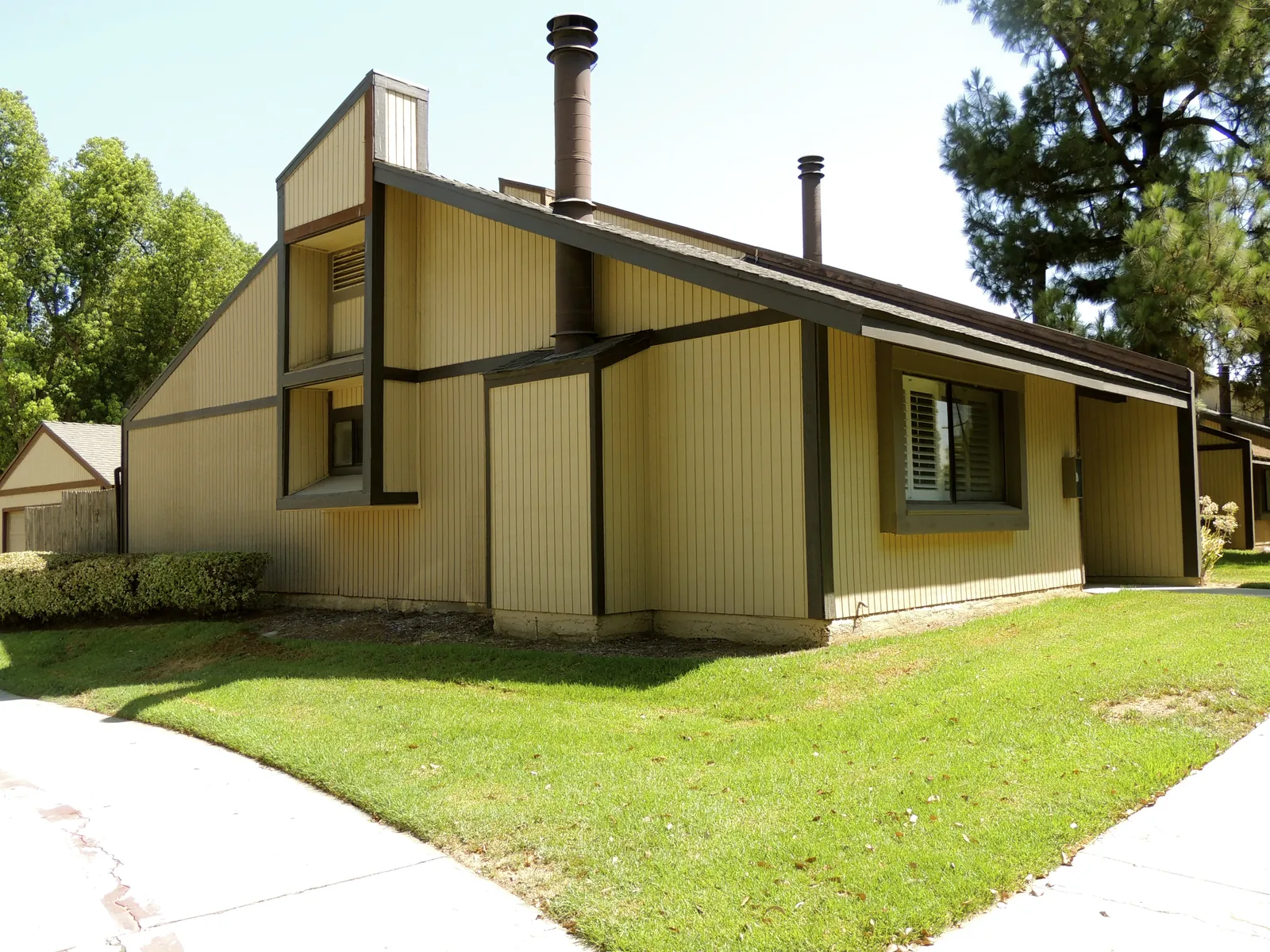
Two houses on the same block in Riverside. Same tract, same builder, same floor plan, both sold in the last eighteen months. One owner opens a tax bill for a little over $6,000. The neighbor opens one for closer to $9,000 and calls me, convinced the county made a mistake.
The county almost never makes that mistake. What it did was apply two different things that people hear as one word, "taxes," and those two things move independently.
I've been selling real estate in this county since 1988, and this is still the question I get asked most after closing. Here's the whole structure, in the order it gets assembled.
Key takeaways
- California caps the basic property tax at 1% of assessed value under Proposition 13. Everything above that 1% on your bill is either voter-approved bond debt or a flat district charge.
- Your total ad valorem rate depends on your tax rate area, a six-digit code for the exact combination of districts your parcel sits inside. Riverside County has hundreds of them.
- Direct assessments are flat dollar amounts, not percentages. They don't shrink because your house is cheaper, which is why they hit modest homes proportionally harder.
- Assessed value is not market value. Two identical houses at the identical rate can pay thousands apart if one has been held since the nineties.
- The annual bill comes in two installments: due November 1 and February 1, delinquent after December 10 and April 10.
- Before you write an offer, pull the current bill for that specific parcel. The listing's tax figure is the seller's number, not yours.
The 1% is the easy part
Proposition 13 did one thing that everybody remembers and one thing that almost nobody does.
The famous part: the Riverside County Assessor states it plainly, "Limiting the property tax rate to 1% of assessed value (plus additional rates necessary to fund local voter-approved bonded indebtedness)." The county Treasurer-Tax Collector describes the same thing on the bill as the General Tax Levy, limited to "$1 per $100 of assessed value of your property."
That 1% is uniform. It's the same in Corona, in Hemet, in Blythe, and in the unincorporated desert. Nobody in California pays a base rate above it.
The part people forget is the parenthetical. Voters can add to it, and they have, repeatedly, in almost every district in this county.
What voters added, district by district
When a school district passes a bond to build a gym or retrofit a campus, the repayment shows up as an extra rate on every parcel inside that district's boundary. Water districts do the same for infrastructure. These are the "additional rates necessary to fund local voter-approved bonded indebtedness" the Assessor's language refers to.
They're small individually and they stack.
The county Auditor-Controller publishes the actual numbers. In its rate comparison covering fiscal years 2022-23 through 2024-25, the general purpose levy sits at 1.0000000000, and the bond and interest rates layered on top include figures like these for fiscal year 2024-25:
| District (FY 2024-25) | Bond & interest rate |
|---|---|
| Alvord Unified School | 0.195% |
| Corona-Norco Unified School | 0.090% |
| Murrieta Valley Unified School | 0.08645% |
So a parcel inside Alvord Unified carried roughly 1.195% that year before anything else was added, while a parcel in Murrieta Valley carried about 1.086%. That gap is real money on a $600,000 assessment, and it has nothing to do with the house.
Water districts can run higher than schools. The same document shows the Rancho Water Santa Rosa Division at 0.5000 for that period, an outlier, but the kind that catches a buyer who assumed every parcel in Temecula looks alike on paper.
The Auditor-Controller posts these documents by fiscal year, through 2026-27. For the current figure on a specific district rather than the illustration above, that's where it lives.
Tax rate areas, and why a street can split
Here's the mechanism behind the "same street, different bill" complaint.
The State Board of Equalization defines a tax rate area as "a geographic area within the jurisdiction of a unique combination of cities, schools, and revenue districts that utilize the regular city or county assessment roll, per Government Code 54900." Each one gets a six-digit number. The BOE publishes the boundaries for Riverside County's 2026 assessment roll as an interactive map.
Read that definition again and the logic falls out. A TRA isn't a neighborhood. It's the intersection of every overlapping jurisdiction that can levy against a parcel. Change any one of them and you've created a different TRA.
District boundaries were drawn over a century of annexations, incorporations, and school district reorganizations. They don't care about street centerlines. I've seen a school district boundary run down the middle of a residential street, which means the odd-numbered houses and the even-numbered houses sit in different TRAs and carry different bond rates permanently.
More commonly in this county, it's a tract line. A builder finishes phase one in 2004 and phase two in 2008, and phase two got financed with a community facilities district that phase one doesn't carry. Two cul-de-sacs, one wall between them, materially different bills forever. That's the Mello-Roos layer, and it deserves its own treatment, which I've written up separately in [what a CFD actually costs in the Inland Empire](/blog/mello-roos-inland-empire-what-a-cfd-costs).
Direct assessments are the sneaky line
The Treasurer-Tax Collector breaks the bill into three parts: the General Tax Levy, locally voted special taxes, and city or district direct assessments.
That third category behaves differently from the first two, and it's where people get surprised.
Direct assessments are flat charges. Landscape and lighting maintenance, vector control, flood control, sewer standby, CFD special taxes. They're billed as dollar amounts set by each district, not as a percentage of what your house is worth. A $400 lighting and landscaping charge is $400 whether the house assessed at $400,000 or $900,000.
Which means the cheaper house pays a bigger share of its bill in charges that have nothing to do with its value. Buyers shopping the lower end of this market feel this most and almost never see it coming, because they're comparing the 1% and assuming the rest scales down with it.
Each direct assessment on the bill carries the levying district's own contact number. If a line looks wrong, the county can't adjust it. You call the district.
Assessed value is doing more work than the rate
Now the other half of the opening story.
Proposition 13 also froze the escalator. The Assessor's office puts it this way: "property assessments cannot be increased by more than 2% annually," and "Real property is reappraised only when a change in ownership occurs or when new construction takes place."
So the assessed value on a house held since 1995 has crept up at a maximum of 2% a year for thirty years, while the house next door that sold last spring got reassessed to its purchase price. Identical homes. Identical TRA. Identical rate. The dollar bills aren't close.
This is why I tell every buyer the same thing: the property tax number on the listing sheet is a fact about the seller's ownership history, not a forecast of your bill. If the sellers bought in 2011, their figure is close to meaningless for you.
Estimate yours from your purchase price instead, because that's what the new base year value will be built on. Apply the TRA's total rate to it, then add the direct assessments as dollar amounts off the current bill. That gets you close.
There's also a one-time bill in year one that catches almost everybody, which I've covered in [the Riverside County tax bill nobody warns you about](/blog/supplemental-property-tax-bill-riverside-county).
When it's actually due
The county mails annual tax bills on or before November 1.
The first installment is due November 1 and goes delinquent at 5 p.m. on December 10. The second is due February 1 and goes delinquent at 5 p.m. on April 10. You can pay the whole year with the first installment if you'd rather be done with it.
Miss the first and a 10% penalty attaches to the unpaid balance. Miss the second and it's 10% plus an administrative charge. If neither installment is paid by June 30, the property becomes tax defaulted and penalties keep accruing.
If an impound account handles your taxes, the servicer pays on this calendar, not yours. Worth confirming it actually happened in your first year rather than assuming.
Common questions
What's the typical total property tax rate in Riverside County?
Start at the 1% base and add that parcel's voter-approved bond rates. Using the Auditor-Controller's fiscal year 2024-25 figures, that put a parcel in Corona-Norco Unified near 1.09% and one in Alvord Unified near 1.195%, before direct assessments. There's no single county number, which is the whole point of the tax rate area system.
How do I find my parcel's tax rate area?
The six-digit TRA appears on your annual tax bill. For a property you don't own yet, the Board of Equalization publishes an interactive TRA boundary map for Riverside County, and the Auditor-Controller publishes rates by tax rate area each fiscal year.
Does my bill go up 2% every year?
The assessed value can rise up to 2% annually under Proposition 13, so the ad valorem portion usually drifts up slowly. Direct assessments move on their own schedules, and a new voter-approved bond adds a rate that wasn't there before. The 2% cap governs the value, not the whole bill.
Why is my first-year bill different from what I estimated?
Because reassessment to your purchase price triggers a separate supplemental bill covering the period from your closing date forward. It arrives on its own, usually isn't paid from an impound account, and a closing between January 1 and May 31 generates two of them.
Can I appeal the assessed value?
Yes, through the county Assessment Appeals Board, within the filing window. An appeal challenges the assessed value. It doesn't touch the rate or the direct assessments, which are set by the districts and by the voters.
Before you write the offer
Pull the current tax bill for the specific parcel, not the tract, and read the direct assessments as line items. If there's a CFD on it, get the full disclosure with the escalator and the end date, not just this year's figure.
That one document tells you more about what the house costs to own than almost anything else in the package, and it reads in ten minutes.
If you're weighing two properties and the tax lines don't make sense next to each other, send me both bills. Our [buyer team](/buyers) does this constantly, and the answer is usually sitting in a district boundary nobody mentioned. [Get in touch](/contact) and we'll go through them.
Sources
- https://www.rivcoacr.org/proposition-13— checked 2026-10-02
- https://countytreasurer.org/sites/g/files/aldnop296/files/migrated/Portals-0-pdf-Pamphlets-Guide-to-Property-Tax-Bro---English.pdf— checked 2026-10-02
- https://countytreasurer.org/current-secured-property-tax-information— checked 2026-10-02
- https://www.boe.ca.gov/maps/RiversideCo.htm— checked 2026-10-02
- https://auditorcontroller.org/sites/g/files/aldnop171/files/2024-09/Tax%20Rate%20Comparisons%2024-25_website.pdf— checked 2026-10-02
- https://auditorcontroller.org/property-tax-tax-rates— checked 2026-10-02

Jeff Maas
Broker-Owner · DRE #00981576 · NMLS #246684
Jeff Maas founded National Realty Group in 1991 and remains its Owner and Broker, and has owned National One Mortgage Corp since 1994, putting real estate, lending, escrow and property management under one roof. He has testified at trial as an expert witness in mortgage lending disputes, retained by both plaintiffs and defendants, and since 2018 has been an adjunct professor at California Baptist University teaching Real Estate Principles and Real Estate Finance. Licensed in California since 1988, he has handled well over a thousand sales and loans, with particular depth in short sales and VA financing. He is a member of the California and National Associations of REALTORS®, and a recipient of National Realty Group's Eagle Award for 2003, 2004 and 2005 and United Wholesale Mortgage's 1% Award for 2021.
More from Jeff →This post is general information, not legal, tax, lending or investment advice, and it is not a guarantee of any result. Market figures are accurate as of the date shown and change. National Realty Group is an Equal Housing Opportunity brokerage.