
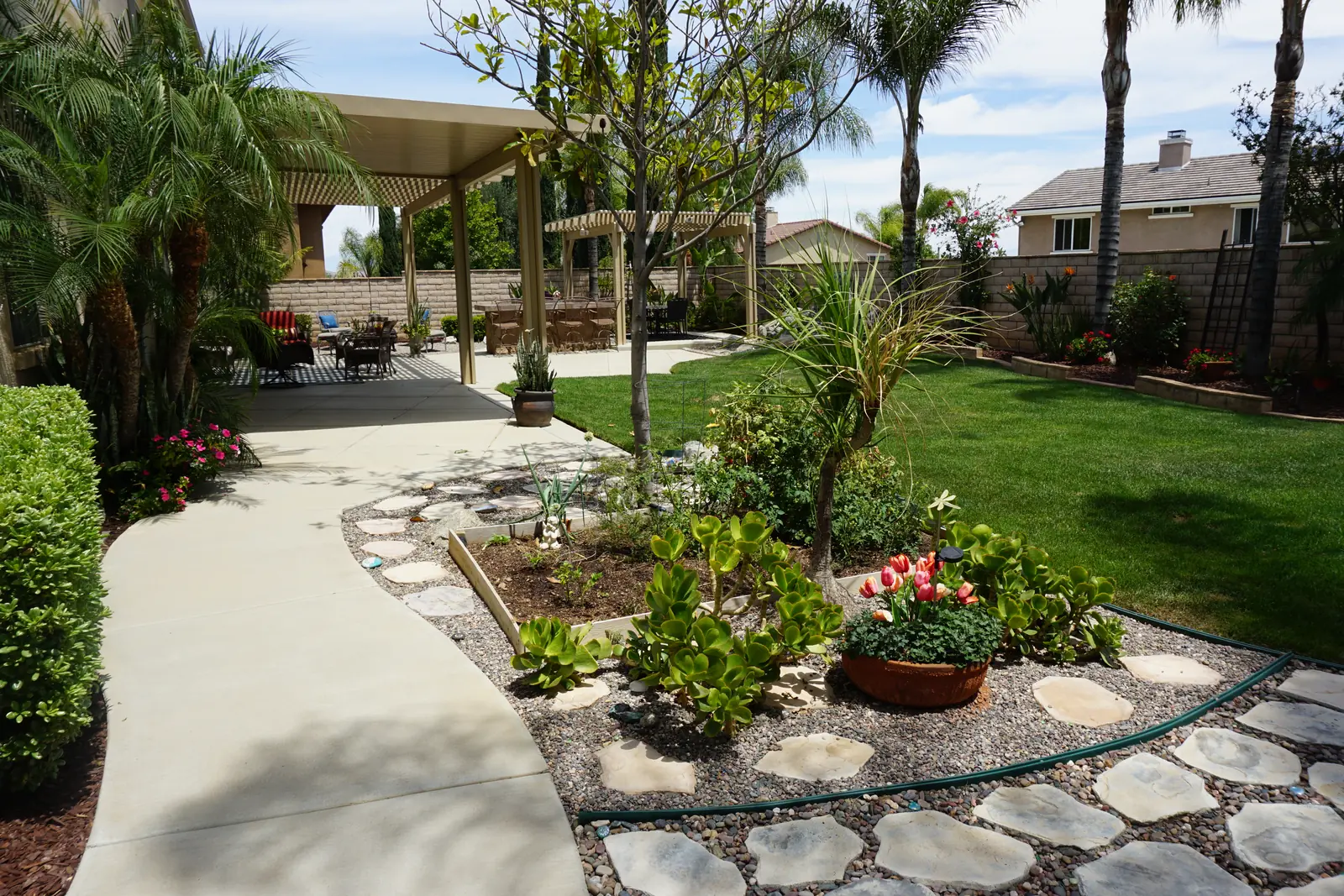
Here's a hypothetical worth walking through, even in a county this dry. A buyer finds a single-story house on a quiet street that backs onto a wash. The offer is accepted, inspections are booked, and a few days into escrow the lender's flood determination comes back showing the house inside Zone AE. Nothing about the property changed overnight. The loan now needs a flood policy, the insurance budget looks different, and the buyer has a decision to make inside a contingency window that's already running.
We'd rather a buyer learn that before writing the offer, and the check takes about five minutes. Because it rarely rains here, flood zones aren't on most buyers' list, so they don't look until the lender does.
Key takeaways
- FEMA's flood maps are public. Anyone can look up an address at the FEMA Flood Map Service Center before making an offer.
- Zones whose names start with A or V are Special Flood Hazard Areas. When a federally regulated or insured lender makes a loan on a building in one, flood insurance is required for the full term.
- Standard homeowners policies typically don't cover flood damage, and FEMA says people outside high-risk areas file around 40% of National Flood Insurance Program claims.
- An NFIP policy bought in connection with making a mortgage loan has no waiting period, but you still want the quote early so the cost is part of your decision.
- A seller's NFIP policy can be transferred to the buyer. Ask whether one exists.
- If the map gets a particular house wrong, FEMA's Letter of Map Amendment is free, though a lender keeps the right to require coverage anyway.
How to tell whether a house is in a flood zone
FEMA publishes Flood Insurance Rate Maps for every participating community, and you can pull them up by address on the Map Service Center. Here's what the zone letters mean.
| Zone | What FEMA means by it |
|---|---|
| A, AE, AO, AH and other A zones | High risk. Inside the Special Flood Hazard Area, the land FEMA expects a 1% annual chance flood (the "base flood" or "100-year flood") to reach |
| V, VE | High risk with wave action. Coastal, so you won't see these in the Inland Empire |
| B, or shaded X | Moderate risk |
| C, or unshaded X | Lowest mapped risk, outside the Special Flood Hazard Area |
Don't let the "100-year" label fool you, since a 1% chance in any single year adds up across the years you'll own the house.
You'll also see the answer in escrow. California's Natural Hazard Disclosure statement under Civil Code §1103.2 asks whether the property is in a Special Flood Hazard Area (any Zone A or V) and, separately, whether it's in an area of potential flooding shown on a dam failure inundation map. The trouble is timing. By the time the NHD report arrives, your inspection and loan clocks are already running, which is why we pull the map before an offer goes in.
For questions the map can't answer, Riverside County Flood Control's Floodplain Management Section handles unincorporated areas and asks for the property address and the assessor's parcel number. Inside a city, the city's public works department is the place to start.
What your lender is required to do
When a federally regulated or insured lender makes, increases, extends or renews a loan, it has to determine the flood zone on FEMA's Standard Flood Hazard Determination Form. If the building is in a Special Flood Hazard Area in a participating community, flood insurance is required for the term of the loan, and the lender has to give you a written notice a reasonable time before closing. The FDIC's consumer compliance manual says the regulators generally treat ten days as enough.
The determination is about the building, not the dirt. Fannie Mae's Selling Guide (section B7-3-06) requires coverage if any part of the principal structure sits in a Special Flood Hazard Area. If the house is outside the zone and only the back of the lot is in it, the requirement generally doesn't attach to the house, though a detached residential structure in the zone that secures the loan does need coverage.
How much coverage? The FDIC manual sets it at the lowest of three numbers: the unpaid principal balance, the maximum the NFIP offers for that type of building, or the building's insurable value. The 2024 edition of that manual listed the NFIP maximum for a residential structure at $250,000 in building coverage. Land isn't insured, only the structure and any contents that secure the loan.
Two more pieces of the loan file change:
- Escrow. For residential loans made, increased, extended or renewed on or after January 1, 2016, the federal rule requires lenders to escrow flood premiums, with a short list of exceptions.
- Private policies. Lenders must accept a private flood policy that meets the regulatory definition of private flood insurance. Fannie Mae accepts one whose coverage and terms are at least equal to an NFIP policy from an insurer meeting its rating requirements.
Price the insurance before your contingencies run out
FEMA's NFIP no longer prices a policy mostly by zone. It looks at how often the property is expected to flood, the types of flooding it faces, distance to water, elevation and the cost to rebuild. Two houses on the same street, in the same zone, can quote very differently.
That's the reason to get a quote while you still have your loan and inspection contingencies in place. Our post on contingency periods in a California purchase contract covers how those windows work and what removing one means. If the flood premium changes whether the house works for your budget, you want to know that while you can still renegotiate or cancel cleanly.
A few things that help:
- Ask the seller about an existing NFIP policy. FEMA says a seller can transfer their policy to the new owner whether or not a mortgage is involved. That's worth asking for in writing.
- Ask for an elevation certificate. FEMA calls it an optional tool that can lower the premium. Some sellers already have one, and the county keeps a searchable file of certificates on record.
- Get a private quote too. The lender has to accept a compliant private policy, so it's worth comparing.
Timing is less of a worry than buyers think. An NFIP policy usually has a 30-day waiting period before it takes effect, but there's no waiting period when the policy is bought in connection with making, increasing, extending or renewing a mortgage loan. You can bind it to close on schedule.
If the house is also near brush, read our post on hard-to-get fire insurance in the Inland Empire too.
Outside the zone still floods
A Zone X result is good news, but it isn't a guarantee. FEMA's own figures say people outside high-risk areas file around 40% of NFIP claims, and that homeowners and renters policies typically don't cover flooding from natural disasters. FEMA puts the damage from one inch of floodwater in an average-size home at roughly $25,000.
Nobody will require a policy on a Zone X house, so it's your call, and one bought later outside a loan transaction generally carries the 30-day wait. Federal disaster assistance is only available after a presidential disaster declaration, and FEMA notes that it often comes as loans you repay.
If you think the map is wrong
Flood maps are drawn at a scale that can miss a house built on a small rise. FEMA's fix is a Letter of Map Amendment, an official determination that a property or structure is outside the Special Flood Hazard Area.
- A LOMA request is free.
- A licensed land surveyor or registered professional engineer completes FEMA's elevation form, or you submit an existing NFIP elevation certificate if the request covers only the structure.
- You include the FIRM panel and the assessor's and plat or deed records.
- FEMA says it responds within 60 days of receiving everything it needs.
A LOMA rarely fits inside an escrow, so for most buyers it's a project for after closing. Even with one in hand, FEMA is plain that a lender retains the prerogative to require flood insurance. A LOMA can take away the federal requirement, but your lender may still keep its own.
What the zone means when you sell
Every future buyer who finances your house with a federally regulated lender will run into the same requirement you did, and the seller's NHD statement will flag the zone for them. That makes the flood policy part of every financed buyer's math.
Plan for it. Keep the NFIP policy active so it can transfer, keep the elevation certificate and any LOMA in the file you'll hand to your agent, and keep records of any mitigation work. FEMA lists improved grading, sump pumps, foundation vents and elevating the structure among the options that reduce risk.
Common questions
Do I need flood insurance if only part of the lot is in the flood zone?
Usually not, if the house itself is outside it. Fannie Mae's rule looks at the structure, so coverage is required when any part of the principal building, or a detached residential structure securing the loan, sits in a Special Flood Hazard Area. Your lender's determination form settles it for your loan.
Can I wait and buy the policy right before closing?
You can, because an NFIP policy bought in connection with making a mortgage loan has no waiting period. The risk is to your budget, so get the quote while your contingencies are still open.
Will the seller's disclosures tell me the house is in a flood zone?
Yes, the Natural Hazard Disclosure statement asks about both the FEMA zone and dam failure inundation areas. Checking FEMA's map yourself gets you the FEMA answer before you make an offer.
Does a Letter of Map Amendment end the insurance requirement?
It removes the federal mandatory purchase requirement for the structure it covers. FEMA notes that a lender retains the prerogative to require flood insurance anyway, so ask your lender how it treats a LOMA before you count on dropping the policy.
Before you write the offer
A flood zone is one of the few things about a house you can check from your phone in a few minutes, and it changes the loan file, the insurance budget and the resale story. Send us the address and we'll pull the map, the zone and the disclosure picture before you commit, and our mortgage team can tell you early what the lender will ask for. For the rest of the buying process, start with our buyer's guide.
Sources
- https://www.fdic.gov/system/files/2024-06/v-6-1.pdf— checked 2026-11-19
- https://selling-guide.fanniemae.com/sel/b7-3-06/flood-insurance-requirements-all-property-types— checked 2026-11-19
- https://agents.floodsmart.gov/articles/flood-maps-and-zones— checked 2026-11-19
- https://agents.floodsmart.gov/articles/13-fast-flood-facts-share-your-clients— checked 2026-11-19
- https://agents.floodsmart.gov/sites/default/files/media/document/2025-09/questions-answers-real-estate-professionals-brochure-08-2025.pdf— checked 2026-11-19
- https://agents.floodsmart.gov/articles/five-tips-talking-about-flood-risk-home-buyers— checked 2026-11-19
- https://hazards.fema.gov/onlinelomc/ext/Help/loadFaq— checked 2026-11-19
- https://codes.findlaw.com/ca/civil-code/civ-sect-1103-2/— checked 2026-11-19
- https://rcflood.org/node/521— checked 2026-11-19

Jeff Maas
Broker-Owner · DRE #00981576 · NMLS #246684
Jeff Maas founded National Realty Group in 1991 and remains its Owner and Broker, and has owned National One Mortgage Corp since 1994, putting real estate, lending, escrow and property management under one roof. He has testified at trial as an expert witness in mortgage lending disputes, retained by both plaintiffs and defendants, and since 2018 has been an adjunct professor at California Baptist University teaching Real Estate Principles and Real Estate Finance. Licensed in California since 1988, he has handled well over a thousand sales and loans, with particular depth in short sales and VA financing. He is a member of the California and National Associations of REALTORS®, and a recipient of National Realty Group's Eagle Award for 2003, 2004 and 2005 and United Wholesale Mortgage's 1% Award for 2021.
More from Jeff →This post is general information, not legal, tax, lending or investment advice, and it is not a guarantee of any result. Market figures are accurate as of the date shown and change. National Realty Group is an Equal Housing Opportunity brokerage.