
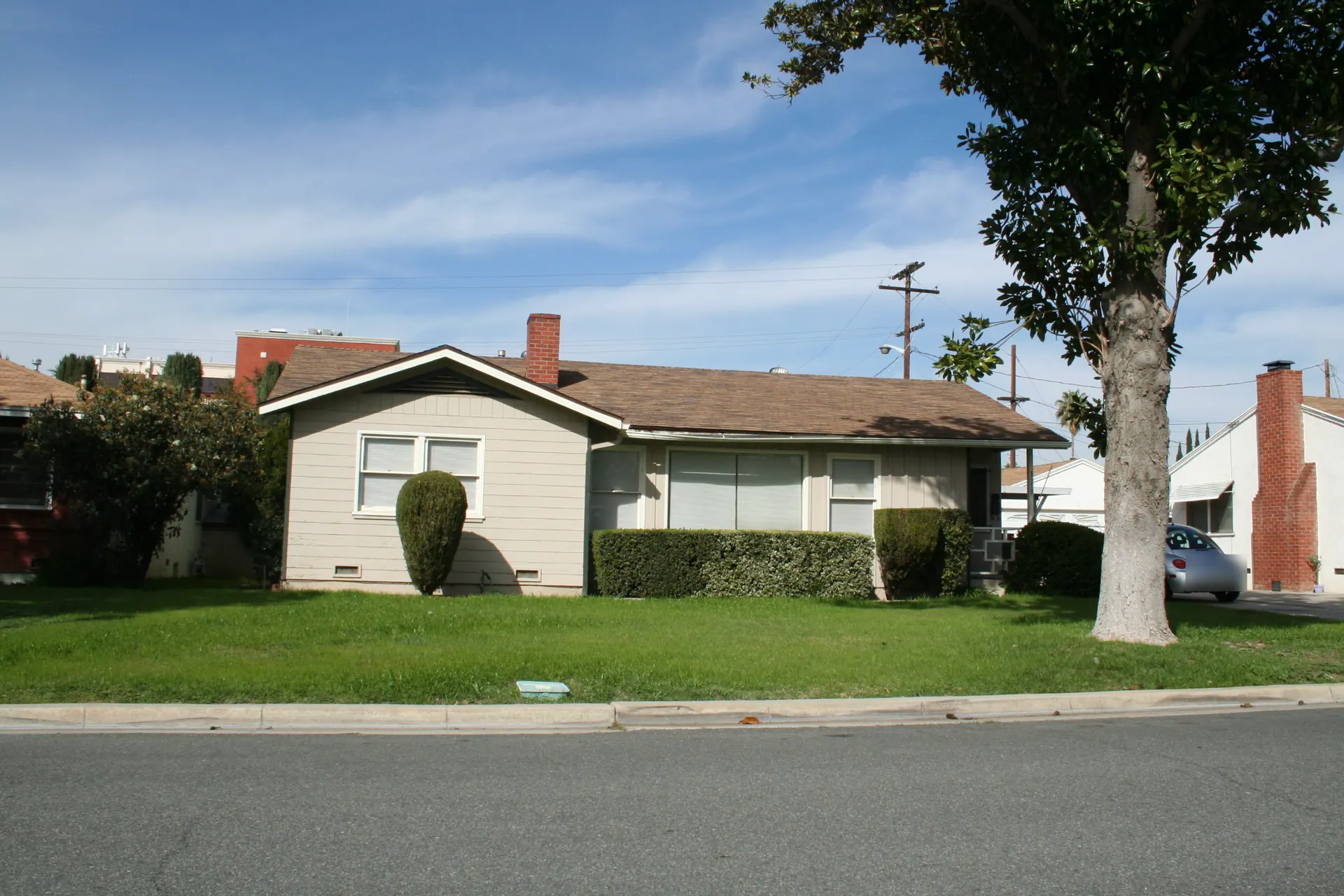
Every few weeks someone sends me a Riverside listing that looks too cheap for what it is, with a note that says some version of: what's wrong with it?
Sometimes nothing is wrong and the price is low because nothing has been touched since the seventies. Sometimes the garage was converted without a permit and the lot can't support what the buyer is already picturing. Those two houses can carry the same asking price, and they are nowhere near the same purchase.
What makes a house a good project is whether you can improve it for less than the work adds back, on a lot and with paperwork that let you do it. A cheap price with none of that behind it just buys you somebody else's deferred maintenance. Here's how I sort one from the other before a client writes an offer.
Key takeaways
- A project is worth doing when the work costs less than it adds back. The asking price by itself tells you nothing about whether that's true.
- County benchmarks describe the middle of the market, not your project house. The California Association of REALTORS® put Riverside County's September 2026 median sold price for an existing single-family home at $620,000, and the county's median days on market that month was 62.
- Check the lot, the permit history, the major systems and the comparable sales before you get attached to the price. Unpermitted work is what most often turns a bargain into a job nobody budgeted for.
- The City of Riverside says most residential properties in the city can have an accessory dwelling unit, and it publishes pre-reviewed permit-ready plans. Both routes still go through standard building permit review.
- Pull comps for finished homes nearby, get written bids on the actual property, then subtract the work and a cushion. What's left is what the house is worth to you in its current condition.
- Nobody can promise appreciation, so your margin has to come from the purchase price and the plan.
What the county numbers can and can't tell you
Start with what's published. The California Association of REALTORS® put the September 2026 median sold price for an existing single-family home in Riverside County at $620,000, down 2.1% from August and down 0.6% from a year earlier. The Federal Reserve Bank of St. Louis publishes the county's listing-side series, which showed a median listing price of $629,000 and a median of 62 days on market for the same month, with 7,557 active listings countywide in October 2026.
Those are two different measurements. One is what sellers are asking, the other is what buyers closed on, and a project house sits in neither place comfortably. A county median blends a one-bedroom condo, a tract house in Jurupa Valley and a custom home on an acre into one figure, which makes it useful for telling you which direction the market is moving and useless for pricing the house in front of you.
The neighborhood-level medians people usually shop by are a worse guide, not a better one. When a slice of the market has only a handful of active listings, one unusual property coming on or going off swings the median by a hundred thousand dollars in a month. I made that case at length in my post on buying a high-end home in Riverside, and it applies just as much at the other end of the price range.
One number worth separating from all of this: the City of Riverside reported in its July 2026 monthly housing message that more than 400 affordable housing units are in the development pipeline citywide. That's planned and in-progress construction, not a list of houses you can tour on Saturday. People conflate the two often enough that it's worth saying plainly.
If you're still working out what your own number is, what Riverside buyers can afford is the place to start, and then we run your real income, debts and savings.
Walk the street before you fall for the house
Say you tour a house on a Tuesday at two in the afternoon. The street is quiet and shaded and exactly what you pictured. At six that evening it's lined end to end with parked cars, and there's a sound carrying from two blocks over that nobody hears at two o'clock. Nothing would be wrong with the house. The problem is that the street never got tested.
Go back at different hours and on different days. Drive the commute you'll be driving, at the hour you'll be driving it. A renovation budget fixes a kitchen. It does not fix a location that doesn't suit how you live, and that's the one line item you can't add later.
The five things to check before the price
These are what I walk through with a client on any house that needs work:
- The lot. Is there room for an addition or a second unit, or is the house already built out to the edges of what the lot allows?
- The permit history. Were past additions, garage conversions and bathroom moves permitted and finaled? This is the single most expensive thing to find out after closing instead of before.
- The major systems. Age and condition of the roof, the plumbing, the electrical panel and the heating and cooling. A house that needs paint, flooring and fixtures is a very different proposition from one that needs a re-roof and a re-pipe. Both can be good buys at the right number; they just aren't the same number.
- The comparable sales. Do finished homes nearby support the value you're counting on once the work is done? That figure is your ceiling, and it's set by the neighborhood, not by your receipts.
- The financing. A property's condition can affect which loan programs it qualifies for. Sort that out with your lender before you write, not during escrow.
What the city says about accessory dwelling units
This comes up on nearly every project house now, usually as "could we put something in the back?"
The City of Riverside's Dwell Riverside program says most residential properties in the city can have an accessory dwelling unit, and it offers pre-reviewed, code-compliant permit-ready plans with multiple exterior finishes and layouts. The city notes that pre-review by its Building Division can also reduce preconstruction architecture and engineering costs. You can also go the custom route with a licensed professional and submit your own plans. Either way, the city says both options go through the standard building permit review process.
So it's a real possibility on a lot of Riverside lots, and it's still a question for the city about your specific parcel. Get that answer before you make an offer rather than after you close, especially if rental income is part of why the numbers work. If that's the plan, whether a property manager earns the fee belongs in your math from the beginning, not as an afterthought in year two.
Comps first, bids second, offer third
You overpay on a project house by paying a finished-house price for an unfinished house. The order of operations is what prevents it:
- Pull comparable sales for finished homes nearby. That's the after-renovation ceiling, and it's the only number in this exercise you don't control.
- Get written bids from licensed contractors before you offer. Costs swing with scope and with the age of the house, which is why I won't publish a renovation figure for Riverside. A bid on your actual property is the only number worth planning around.
- Subtract the work and a cushion from that ceiling. What's left is what the house is worth to you as it stands today.
- Inspect hard. On an older or as-is home I want somebody's eyes on the roof, the foundation, the plumbing, the electrical and every past addition.
Because a project house usually needs a deeper cash reserve than a turnkey one, the cash it takes to buy in Riverside is worth reading before you start touring. And if this would be your first purchase, why Riverside works for first-time buyers covers the ground underneath all of this.
Speed depends on where you're looking
Riverside County's median days on market was 62 in September 2026, which sounds like a market with room to think. Individual pockets inside the county move at their own pace, though, and a well-priced house in a sought-after one can be gone in a week while a similar house two miles away sits.
That cuts both ways, and the practical version is simple. Know which kind of pocket you're shopping in before you're standing in a house deciding how fast to write. The questions to ask before buying in Riverside will help you pressure-test the plan while you still have time to think about it.
Common questions
What are the most affordable neighborhoods to buy a home in Riverside?
Price varies street by street in this city, far more than any neighborhood average suggests, so I'd rather not hand you a ranking that falls apart on contact with the MLS. Riverside's hidden gem neighborhoods is a good tour of the areas most buyers overlook. The real answer comes from a live search set to your budget, your property type and the condition you're willing to take on, which I'll set up for you.
How do I find a Riverside house that needs cosmetic updates but has long-term potential?
Search on condition, days on market and price reductions, then verify the lot, the permit history and the comps before you get attached. Cosmetic-only projects are usually the safer bet, because you're not gambling on what's behind the drywall. I set up custom searches for clients so these listings arrive the day they hit the market.
Are fixer-uppers in Riverside a good investment in 2026?
They can be, when you buy at a price that leaves room after the work and nearby comps support the finished value. What you shouldn't do is count on the market to rescue a thin deal: the California Association of REALTORS® had the county's median sold price down 0.6% year over year in September 2026. The margin needs to come from what you pay and how you plan the work.
How much should I budget for renovating an older Riverside home?
The only number worth trusting is a written bid from a licensed contractor on the specific property. Costs depend on scope, age and what the inspection turns up, so a generic figure would mislead you more than it helps. Keep a cash reserve past your down payment, and we'll talk through how deep it should be before you make an offer.
Can an accessory dwelling unit improve a Riverside property's value or rental potential?
It can, and the City of Riverside says most residential properties in the city can have one. What it depends on is your lot, your zoning and whether the existing structures were properly permitted, so confirm eligibility with the city before you build a number around it. The city's Dwell Riverside page is where the permit-ready plans and the application routes live.
Where to start
Big potential in Riverside is real, and it lives in the details of one specific property rather than in anything you can read off a city-wide median. If you want a short list built around your budget and the kind of project you're equipped to take on, that's a conversation worth having before you start touring.
My buyer's guide walks through the rest of the process from there.
Sources
- https://www.car.org/marketdata/data/countysalesactivity— checked 2026-11-16
- https://fred.stlouisfed.org/series/MEDLISPRI6065— checked 2026-11-16
- https://fred.stlouisfed.org/series/MEDDAYONMAR6065— checked 2026-11-16
- https://fred.stlouisfed.org/series/ACTLISCOU6065— checked 2026-11-16
- https://riversideca.gov/ADU— checked 2026-11-16
- https://riversideca.gov/press/july-2026-monthly-message-housing— checked 2026-11-16

Jeff Maas
Broker-Owner · DRE #00981576 · NMLS #246684
Jeff Maas founded National Realty Group in 1991 and remains its Owner and Broker, and has owned National One Mortgage Corp since 1994, putting real estate, lending, escrow and property management under one roof. He has testified at trial as an expert witness in mortgage lending disputes, retained by both plaintiffs and defendants, and since 2018 has been an adjunct professor at California Baptist University teaching Real Estate Principles and Real Estate Finance. Licensed in California since 1988, he has handled well over a thousand sales and loans, with particular depth in short sales and VA financing. He is a member of the California and National Associations of REALTORS®, and a recipient of National Realty Group's Eagle Award for 2003, 2004 and 2005 and United Wholesale Mortgage's 1% Award for 2021.
More from Jeff →This post is general information, not legal, tax, lending or investment advice, and it is not a guarantee of any result. Market figures are accurate as of the date shown and change. National Realty Group is an Equal Housing Opportunity brokerage.