

Selling a home in San Bernardino County involves several layers of cost: a documentary transfer tax set by California law, customary closing service fees for escrow and title, prorations for property taxes and HOA dues, and a variable layer of negotiated items like buyer repair credits and home warranties. The exact total depends on your sale price, your mortgage payoff, and what you agree to in the purchase contract.
One line most sellers worry about is simpler here than it is a few miles west, and it's worth understanding why before you look at anything else on the sheet.
Key takeaways
- San Bernardino County's documentary transfer tax is $0.55 per $500 of value, or $1.10 per $1,000, under California Revenue and Taxation Code §11911. It applies to conveyances of more than $100.
- The taxable base is the property's value minus any liens or encumbrances already of record, which is not always the same as the contract price.
- The county Assessor-Recorder-Clerk publishes one countywide rate, with no city-tier bump in its schedules. Inside the City of Riverside, one county over, a city tax stacks on top of the county's.
- Recording fees are fixed and small: $14 for the first page of a title, $3 for each additional page, and $20 more if the Preliminary Change of Ownership Report is missing.
- Escrow fees, title insurance allocation, and who pays the transfer tax are all negotiable in the purchase contract. Local custom is a starting point, not a legal requirement.
- Buyer repair credits, home warranties, and HOA transfer fees are purely contractual and can shift your net proceeds in either direction.
What costs are fixed by California law when you sell?
Two categories of closing costs are driven by statute and are required for the transaction to record: the documentary transfer tax and recording fees. These aren't negotiable in the sense that someone has to pay them, but who pays them can be addressed in your contract.
The documentary transfer tax is one flat rate countywide
The California documentary transfer tax is authorized under Revenue and Taxation Code §11911 and collected at the time of recording. The San Bernardino County Assessor-Recorder-Clerk publishes a single rate: $0.55 per $500 of value, or any fractional portion of it, on conveyances of more than $100. On a $500,000 sale with no liens staying in place, that comes to $550.
| Location | Transfer tax rate | Taxable base | Collected when |
|---|---|---|---|
| San Bernardino County (countywide) | $0.55 per $500 of value | Value minus liens already of record | At deed recording |
| Riverside County (outside the City of Riverside) | $0.55 per $500 of value | Value minus liens already of record | At deed recording |
| City of Riverside (shown for comparison) | $1.65 per $500 combined: $0.55 county plus $1.10 city | Value minus liens already of record | At deed recording |
That uniformity is worth noting, because it isn't how the whole region works. A charter city can levy its own documentary transfer tax under independent constitutional authority, and where one does, the city tax stacks on top of the county's rather than replacing it. The City of Riverside is the nearest example: $1.10 per $1,000 to the county plus $2.20 per $1,000 to the city, $3.30 per $1,000 in all. If you're selling on that side of the county line, the [Riverside County seller cost breakdown](/blog/what-it-costs-to-sell-a-house-in-riverside-county) walks through it. Nothing comparable appears in San Bernardino County's published schedules.
One detail catches sellers off guard. The taxable base is the property's value minus any liens or encumbrances already of record. In a standard residential sale where the mortgage is paid off at closing, the taxable value tracks closely with the contract price. The statute is written to handle more complex scenarios, though, such as a transfer subject to an existing lien that stays in place. Your escrow officer calculates the exact figure at closing, and the county requires a transfer tax declaration with the deed. A dollar amount by itself won't be accepted.
By local custom, the transfer tax appears as a seller-side line item on the net sheet. It can be reallocated to the buyer in the purchase contract; that's a matter of negotiation, not law. The county confirms the rate and when it's due, not which party has to pay it.
Recording fees
Recording fees are also required for the deed and any related documents, like the release of your deed of trust, to be officially recorded. In San Bernardino County they run $14 for the first page of a title, $24 where the real estate fraud fee applies, and $3 for each additional page. If the Preliminary Change of Ownership Report doesn't come in with the document, the recorder adds $20.
These aren't large numbers next to the rest of a net sheet. They're also non-negotiable in the sense that the transaction can't close without them.
What are the customary closing service fees?
Beyond the statutory costs, every sale involves service fees to the professionals who facilitate the closing. These are practically required to close a financed sale, even though they aren't set by law.
Escrow fees
In Southern California, including all of the Inland Empire, escrow is the standard closing mechanism, not attorney-led closings. The escrow officer receives and disburses funds, coordinates document preparation and signing, and calculates prorations for property taxes, HOA dues, and other recurring costs. By standard practice across San Bernardino County, escrow fees are split between buyer and seller, but that split is negotiable in the contract. Depending on market conditions, repair credits, or other concessions, one side may absorb more of the escrow cost.
Title insurance
An owner's title policy is purchased once, at closing, and protects the buyer's ownership interest going forward. In Southern California custom the seller typically covers the owner's policy, but this is custom rather than statute, and it can be negotiated. Your escrow officer will show it as a line item on the net sheet.
Prorations: property taxes and HOA dues
California property taxes are billed in two installments against a fiscal year that runs July 1 to June 30, so your net sheet will include a proration that divides the year's taxes at your close date. If your property sits in a community with an HOA, you'll also see a proration of regular dues and any special assessments up to closing. These are adjustments rather than fees, making sure each party pays for the time they owned the property.
For HOA properties, sellers typically also pay document fees, covering the CC&Rs, budgets, and rules the buyer is entitled to review, and HOA transfer fees for setting up the buyer's new account. The specific amounts vary by association and are governed by California Civil Code, which caps what HOAs can charge for certain documents. Your escrow officer requests the HOA's demand statement early in the process so there are no surprises.
Which seller costs are purely negotiable?
This is where two sellers at the same price point can end up with very different net proceeds. The negotiated layer of your net sheet is driven entirely by what you agree to in the purchase contract. None of it is required by law.
Buyer repair credits and closing cost credits
After a home inspection, buyers often request either repairs or a credit toward closing costs. A credit shows up on your net sheet as a direct reduction in gross proceeds. In price-sensitive submarkets across San Bernardino County, these credits are common, and the amount is a function of what you negotiate. This is the kind of variable I model out with sellers before we accept an offer, because a credit that looks small on paper can meaningfully shift your net.
Home warranties
Seller-paid home warranty plans can make a listing more attractive, particularly in competitive price ranges. They add a distinct line item to your net sheet. Some sellers offer them proactively; others agree to one as part of a repair negotiation. They're optional, but worth knowing about before you're in the middle of a counteroffer.
Broker compensation
Broker fees and commissions are fully negotiable and not set by any law or industry standard. There is no standard, typical, or customary rate. The listing-side fee is agreed in your listing agreement. Any compensation a seller chooses to offer a buyer's agent is optional and separately negotiable; it isn't automatically bundled, and it's no longer offered through the MLS. If you want to know what that would look like in your situation, that's a conversation to have with me directly, not a number to pull from a blog post.
Your specific number requires a real net sheet
Every seller's situation is different. Your mortgage payoff, your HOA status, your close date, which drives the property tax proration, and what you agree to in the contract all feed into your net. The only way to know your real number is to run it with someone who knows this market.
Common questions
Does any city in San Bernardino County charge its own transfer tax on top of the county's?
None appears in the county Assessor-Recorder-Clerk's published schedules, which list one countywide rate of $0.55 per $500 of value. That differs from the City of Riverside next door, where a city tax stacks on top of the county rate for a combined $3.30 per $1,000. If you're selling inside an incorporated city and want certainty before you sign, your escrow officer can confirm the exact figure against the recorder's schedule for your parcel.
Who usually pays the documentary transfer tax when I sell in San Bernardino County?
By local custom the seller pays it, and it usually appears as a seller-side line item on the net sheet. It's negotiable in the purchase contract. The county Assessor-Recorder-Clerk confirms only that the tax is due at recording, not which party has to pay it. In a competitive situation, or one involving significant buyer concessions, it's worth discussing reallocation with your agent.
Are escrow fees legally required to be split 50/50?
No. There's no California law requiring a specific escrow fee split. Local custom across the Inland Empire often leans toward an even split between buyer and seller, but the allocation is negotiable in the purchase contract. Depending on market conditions, repair credits, or other concessions in your deal, one party may absorb more of the escrow cost.
Do I have to pay for a home warranty, buyer repair credits, or HOA transfer fees?
None of these are required by California law. They're all contractual and negotiable. A home warranty becomes a seller cost only if you agree to provide one, either proactively or as part of a repair negotiation. Buyer repair credits arise from inspection findings and are a function of what you agree to in the contract. HOA transfer fees are specific to common-interest developments and governed by your association's rules and California Civil Code. I go through all of these with my sellers before we accept any offer so there are no surprises on the net sheet.
Selling in San Bernardino County involves a predictable set of cost categories, but the dollar impact of each one depends on your property, your location, and your contract. Knowing the categories in advance puts you in a stronger negotiating position, and a net sheet built around your own numbers is the only way to walk into closing with confidence.
If you're weighing a sale, start with [what your home is worth today](/home-valuation), then see [how we work with sellers](/sellers) and we'll go through every line of the net sheet together.
Sources
- https://arc.sbcounty.gov/document-recording/— checked 2026-10-14
- https://arc.sbcounty.gov/faqs/— checked 2026-10-14
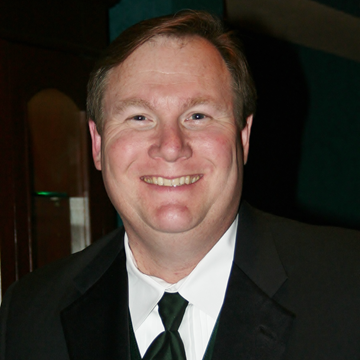
Jeff Maas
Broker-Owner · DRE #00981576 · NMLS #246684
Jeff Maas founded National Realty Group in 1991 and remains its Owner and Broker, and has owned National One Mortgage Corp since 1994, putting real estate, lending, escrow and property management under one roof. He has testified at trial as an expert witness in mortgage lending disputes, retained by both plaintiffs and defendants, and since 2018 has been an adjunct professor at California Baptist University teaching Real Estate Principles and Real Estate Finance. Licensed in California since 1988, he has handled well over a thousand sales and loans, with particular depth in short sales and VA financing. He is a member of the California and National Associations of REALTORS®, and a recipient of National Realty Group's Eagle Award for 2003, 2004 and 2005 and United Wholesale Mortgage's 1% Award for 2021.
More from Jeff →This post is general information, not legal, tax, lending or investment advice, and it is not a guarantee of any result. Market figures are accurate as of the date shown and change. National Realty Group is an Equal Housing Opportunity brokerage.